

As we cross the 50-year milestone, our fitness and nutrition priorities naturally shift. The explosive, high-impact workouts of our younger years can leave knees, hips, and lower backs shouting in protest.
Fortunately, cutting back on refined carbohydrates is one of the most powerful anti-inflammatory moves you can make. By pairing a low-carb lifestyle with joint-friendly, low-impact exercise, you can unlock a level of strength, mobility, and steady daily energy that leaves you feeling better than you did a decade ago.
The Biological Matchmaking of Low-Carb Eating and Happy Joints
Chronic joint discomfort is often amplified by systematic inflammation. Standard Western diets—packed with processed sugars and refined grains—cause blood sugar spikes that trigger the release of inflammatory markers called cytokines.
When you transition to a low-carb lifestyle rich in healthy fats (like avocados and olive oil) and high-quality protein, your body shifts its primary fuel source. This metabolic switch significantly lowers markers of systemic inflammation. Think of a clean, low-carb diet as an internal lubricant that naturally cools the fire of achy joints from the inside out.
Busting the Myth of the “Sugar Rush” Workout
Many people still believe you need a massive bowl of pasta or a sugary sports drink to survive a workout. But for the active, mature adult, relying on sugar means relying on a roller coaster of spikes and crashes.
For steady-state, low-impact movements, fat is your body’s longest-burning and most efficient fuel source. When you are adapted to using fat for fuel, your energy levels remain perfectly level. You completely avoid the sudden exhaustion that leads to sloppy, injury-prone exercise form.
The “No-Impact” Blueprint for Longevity
Protecting your joints doesn’t mean taking it easy. You can still experience high-intensity muscle building through controlled, deliberate loading. The goal is to build strong muscle to absorb the daily forces that would otherwise strain your skeleton.
To help protect your hips, knees, and spine, incorporate these joint-safe movements into your fitness routine:
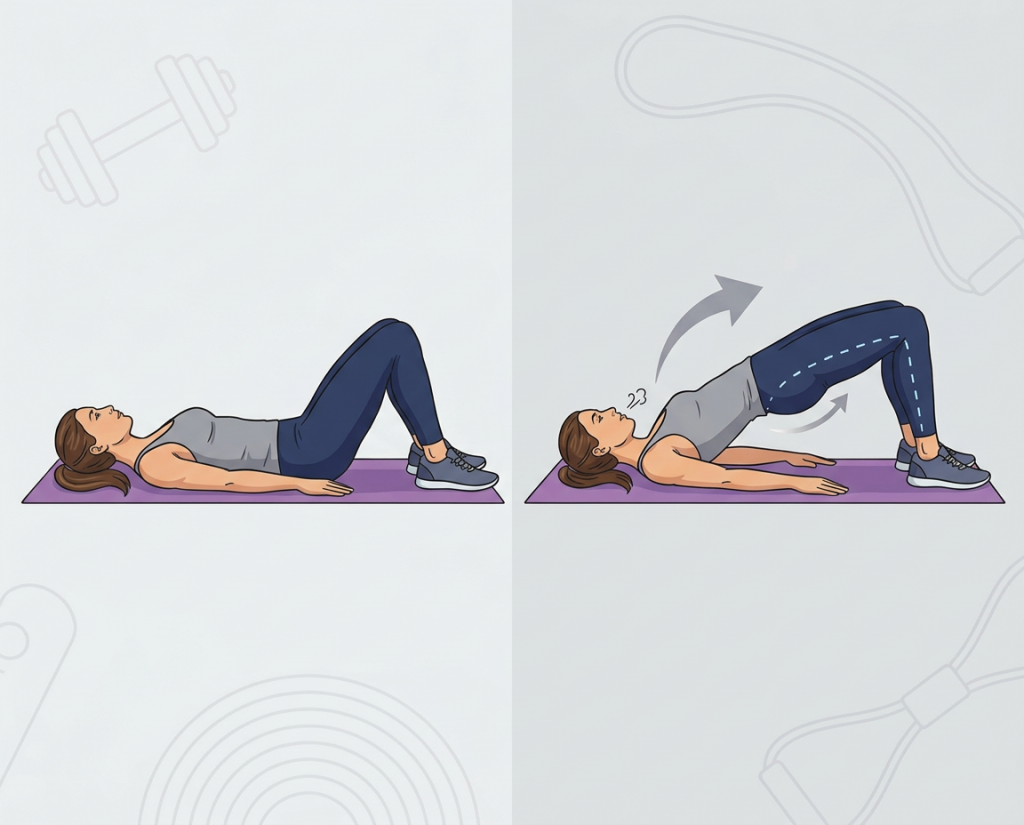
Glute Bridges: Lie flat on your back with knees bent and feet flat on the floor. Drive through your heels to lift your hips toward the ceiling, squeezing your glutes at the top. This builds powerful hamstrings and glutes without loading weight onto your spine.
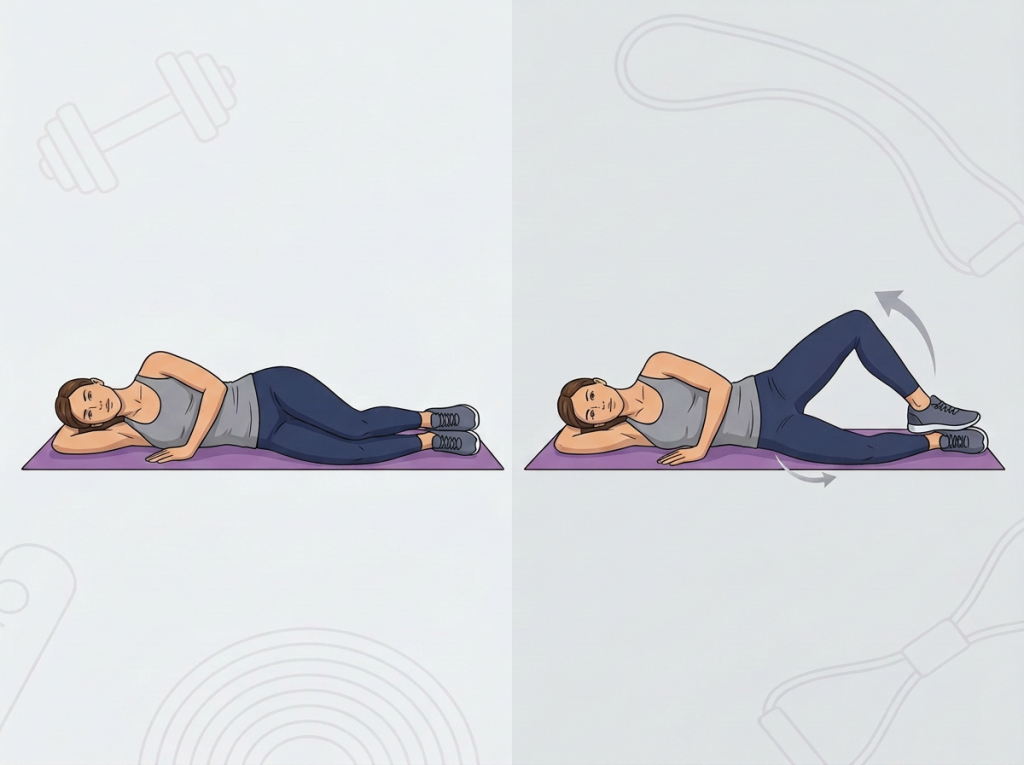
Side-Lying Clamshells: Lie on your side with your hips and knees bent. Keeping your feet pinned together, open your top knee like a clamshell. This movement activates the gluteus medius, a crucial stability muscle that keeps your pelvis level and prevents your knees from collapsing inward when walking.
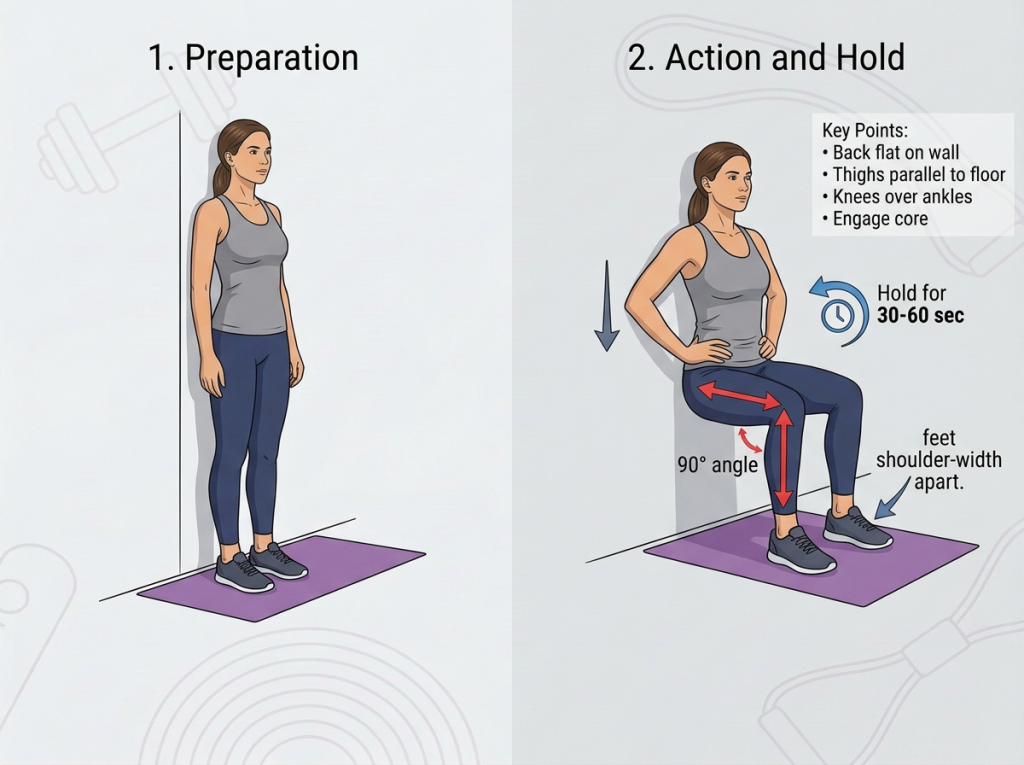
Isometric Wall Squats: Instead of doing repetitive, grinding squatting movements, lean your back flat against a wall and lower yourself into a comfortable, partial squat hold. Holding this position forces the quadriceps to work hard to protect the knees, utilizing time-under-tension safely without repetitive joint wear.
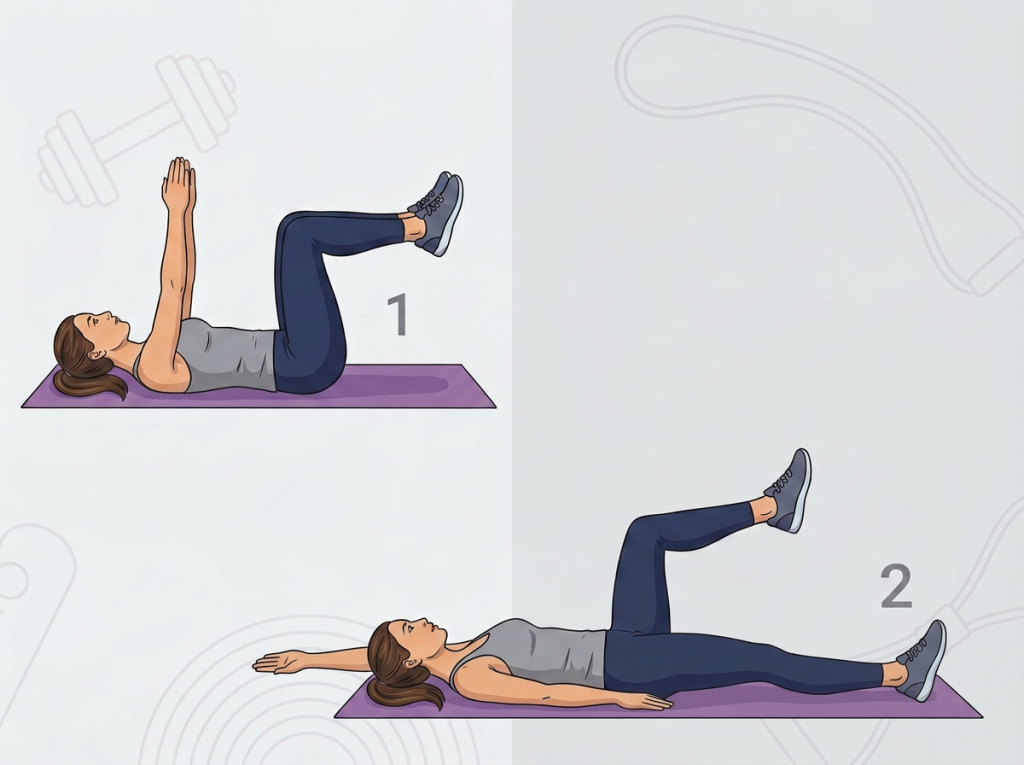
The Dead Bug: Lie on your back with your arms extended toward the ceiling and your knees bent at a 90-degree angle. Slowly lower your right arm behind your head while simultaneously extending your left leg straight out, hovering it just above the floor. Return to the starting position and repeat on the opposite side. This movement builds deep core and spinal stability entirely from the floor, taking all pressure off the lower back.
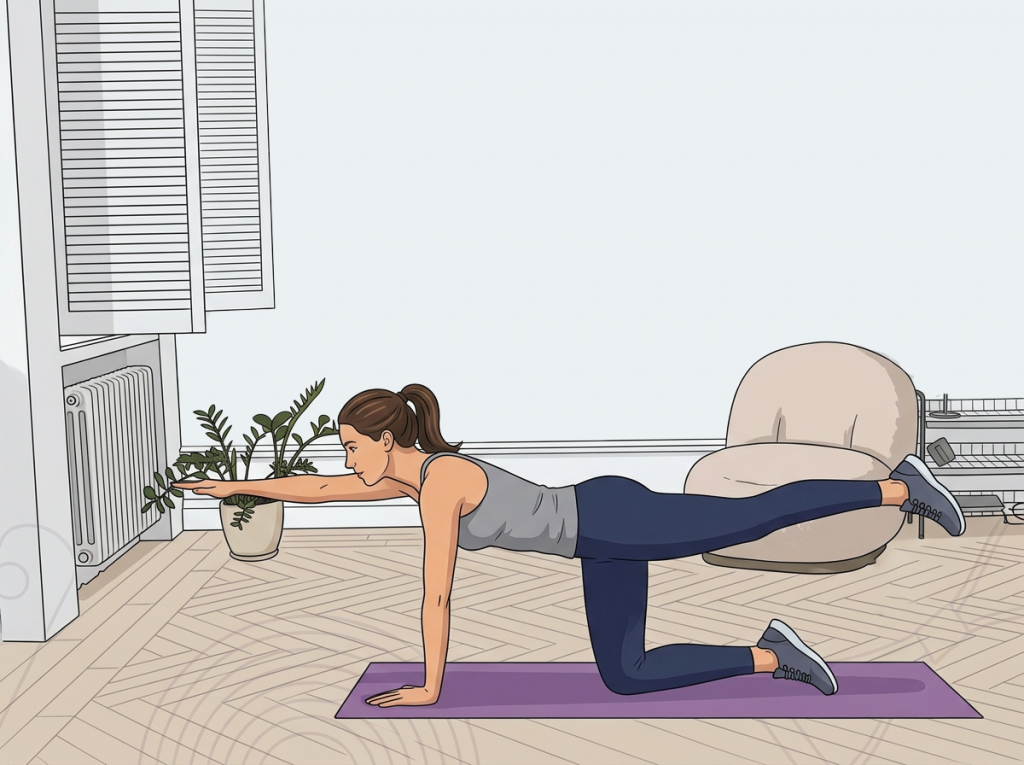
The Bird-Dog: Start on your hands and knees with a flat, neutral spine. Slowly extend your right arm straight forward and your left leg straight backward until they are parallel to the floor. Hold for a brief second to engage your glutes and core, then return to all fours and switch sides. This exercise improves balance and coordination while strengthening the posterior chain without compressing the knees or lumbar spine.
Consistency is Your Superpower
The most effective routine is the one you can do consistently without causing a pain flare-up. By using low-carb nutrition to calm full-body inflammation and gentle resistance training to support your structural alignment, you can safeguard your mobility for decades to come.
The information provided in this article is for educational and informational purposes only and should not be construed as medical advice. Always consult with a qualified healthcare professional or your primary physician before starting any new diet, changing your exercise routine, or making significant lifestyle changes, especially if you have pre-existing joint conditions or metabolic health concerns.